

Campaign Signs With Stakes: What to Order & How Many You Need
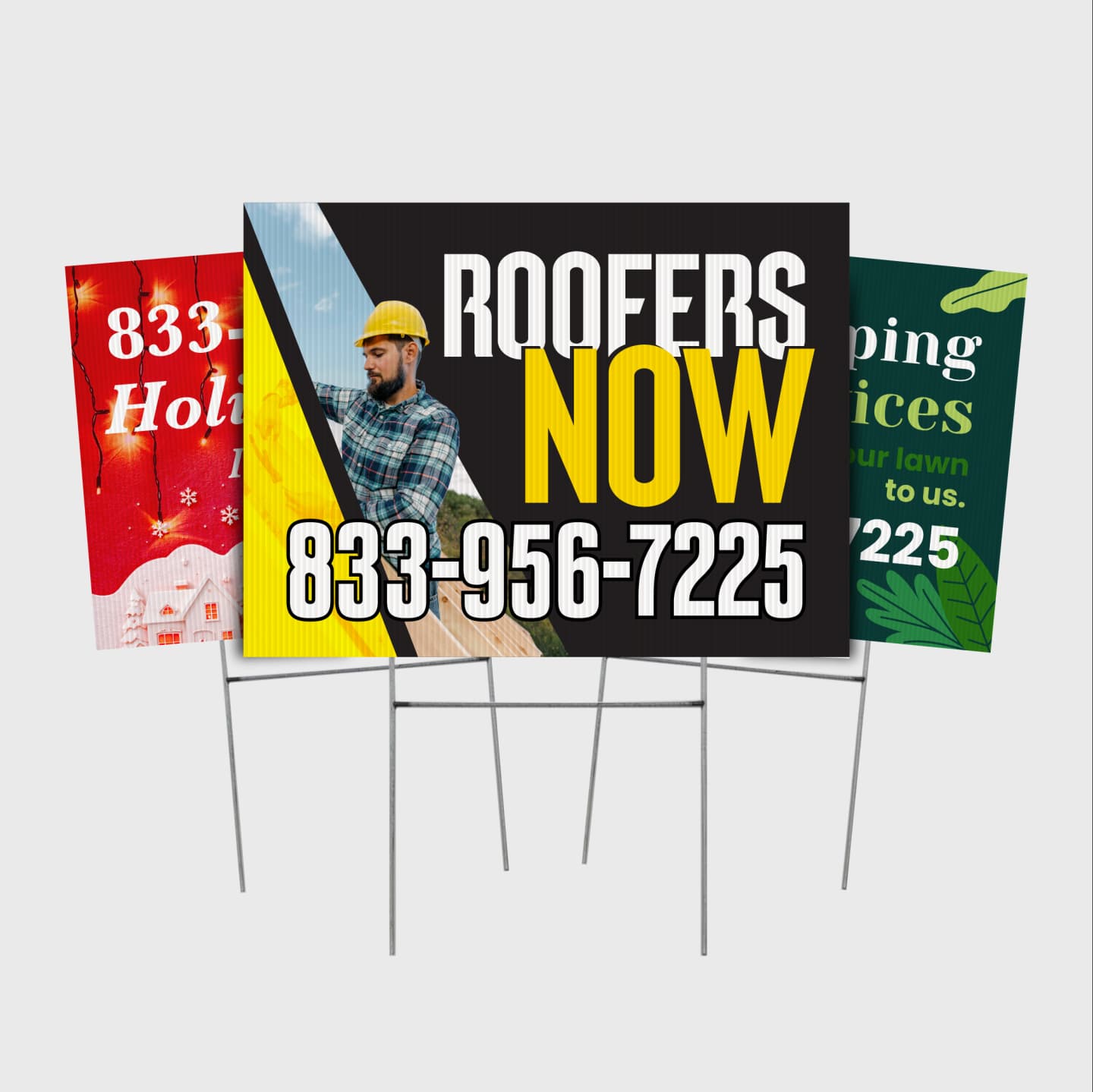
Every campaign hits the same moment: it’s time to order signs, and suddenly there are ten decisions you didn’t know you had to make. What size? What material? Do the stakes come with them? How many is enough, and how many is a garage full of waste? This is the ordering guide — not where to place them, which is its own topic, but what to actually put in the cart so your signs show up ready to stake and you don’t run out in October.
Placement is a separate question with real legal edges. Once your signs arrive, read the political yard sign placement guide before your team fans out, and see the cost breakdown if you’re still setting the budget.
Signs and stakes: order them together
The single most common ordering mistake is buying signs and forgetting the stakes. A corrugated plastic sign has two hollow flutes on the bottom edge; a wire H-stake slides up into those flutes and pushes into the ground. No stake, no standing sign.
You have two paths. Order signs and stakes together as a bundle, which is what most campaigns should do, or buy them separately and match the stake to the sign. If you buy separately, the standard road-sign stake for a single-sided or double-sided corrugated sign is a 10-gauge or heavier wire H-stake sized to your sign width — a 30-inch stake for smaller signs, taller for 18x24 and up. Thin, undersized stakes bend in wind and lean after the first storm, which is why the wire gauge matters more than the price.
Buy a few more stakes than signs. Stakes get lost, bent, and left in the ground when a sign is pulled, and a spare box of stakes is the cheapest insurance in the whole order.
What to order: size, material, sides
Size. The workhorse political sign is 18x24 inches, single- or double-sided, on corrugated plastic. It’s big enough to read from a moving car and small enough to be legal under most local size limits. Go larger — 24x36 — for high-traffic intersections and 4x8 banners for a few anchor locations, but 18x24 is the volume order.
Material. Corrugated plastic (often called by the brand name Coroplast) is the standard: weatherproof, light, cheap in bulk, and stiff enough to stand on a wire stake. It’s what nearly every yard sign you’ve ever seen is made of, and there’s rarely a reason to pay for anything heavier for a season’s worth of lawn signs.
Sides. Double-sided costs a little more and is worth it anywhere traffic passes from both directions — corners, medians you’re allowed to use, and busy two-way streets. Single-sided is fine for a supporter’s lawn that faces one way.
Color and the legal line. Full-color printing is standard and cheap at volume. Two things that must be right before you print: high-contrast, legible design (dark text on a light field reads from farther away than anything clever), and the “Paid for by” disclaimer required by federal and most state rules. Getting the disclaimer wrong means a reprint, so confirm the exact wording with your state election office before you approve the proof.
How many signs do you actually need?
More than you think, but not infinite. Three inputs set the number.
Start with your placement map — count your committed supporter lawns, your approved high-traffic spots, and your key intersections. That’s your baseline demand.
Then add a replacement buffer of 10 to 20 percent. Signs get stolen, blown away, run over, and pulled by city crews from the right-of-way. Campaigns that order exactly enough spend October scrambling for reprints at rush prices; campaigns that order a buffer swap a lost sign the same day.
Finally, mind the price break. Corrugated signs get dramatically cheaper per unit at higher quantities — the jump from 100 to 250 or 250 to 500 often drops the per-sign price enough that ordering up to the next tier costs little more in total while giving you the buffer for free. Order to the price break, not to the exact count.
The quick ordering checklist
Before you approve the order, confirm: 18x24 corrugated as your base size, double-sided where traffic runs both ways, H-stakes included (plus spares), full-color high-contrast art, and the “Paid for by” disclaimer verified against your state’s wording. Order to the next price break for a built-in replacement buffer.
Get the order right and your signs arrive ready to stake, on budget, with enough spares to last through Election Day. Get it wrong and you’re paying rush rates for reprints in the final stretch.
Ready to order? Shop political campaign signs and bundles — 18x24 corrugated, full color, double-sided options, with H-stakes included and bulk pricing built for candidates. Ordering signs on their own? Add sturdy H-stakes so every sign stands straight all season.
FAQ
Do campaign yard signs come with stakes?
It depends on how you order. Bundled campaign-sign packages usually include H-stakes; if you buy signs alone, order matching wire H-stakes separately — and buy a few extra, since stakes get lost and bent.
What size should campaign signs be?
The standard is 18x24 inches on corrugated plastic, big enough to read from a passing car and small enough to meet most local size limits. Use 24x36 or 4x8 banners only for a few high-traffic anchor spots.
How many campaign signs should I order?
Count your committed placements, then add a 10–20% replacement buffer for stolen, damaged, and removed signs. Because per-sign prices drop sharply at higher quantities, ordering up to the next price break often gives you that buffer for little extra.
What kind of stakes do political signs use?
Corrugated signs use wire H-stakes that slide into the flutes on the bottom edge. Use a heavy-gauge (10-gauge or thicker) stake sized to your sign width so it doesn’t bend or lean in wind.
What does “Paid for by” mean on a campaign sign?
It’s a disclaimer required by federal and most state rules identifying the committee behind the sign. Confirm the exact wording with your state election office before printing, since a mistake means a reprint.