

Vendor Tent Buyer's Guide: Sizes, Frames & What Actually Holds Up
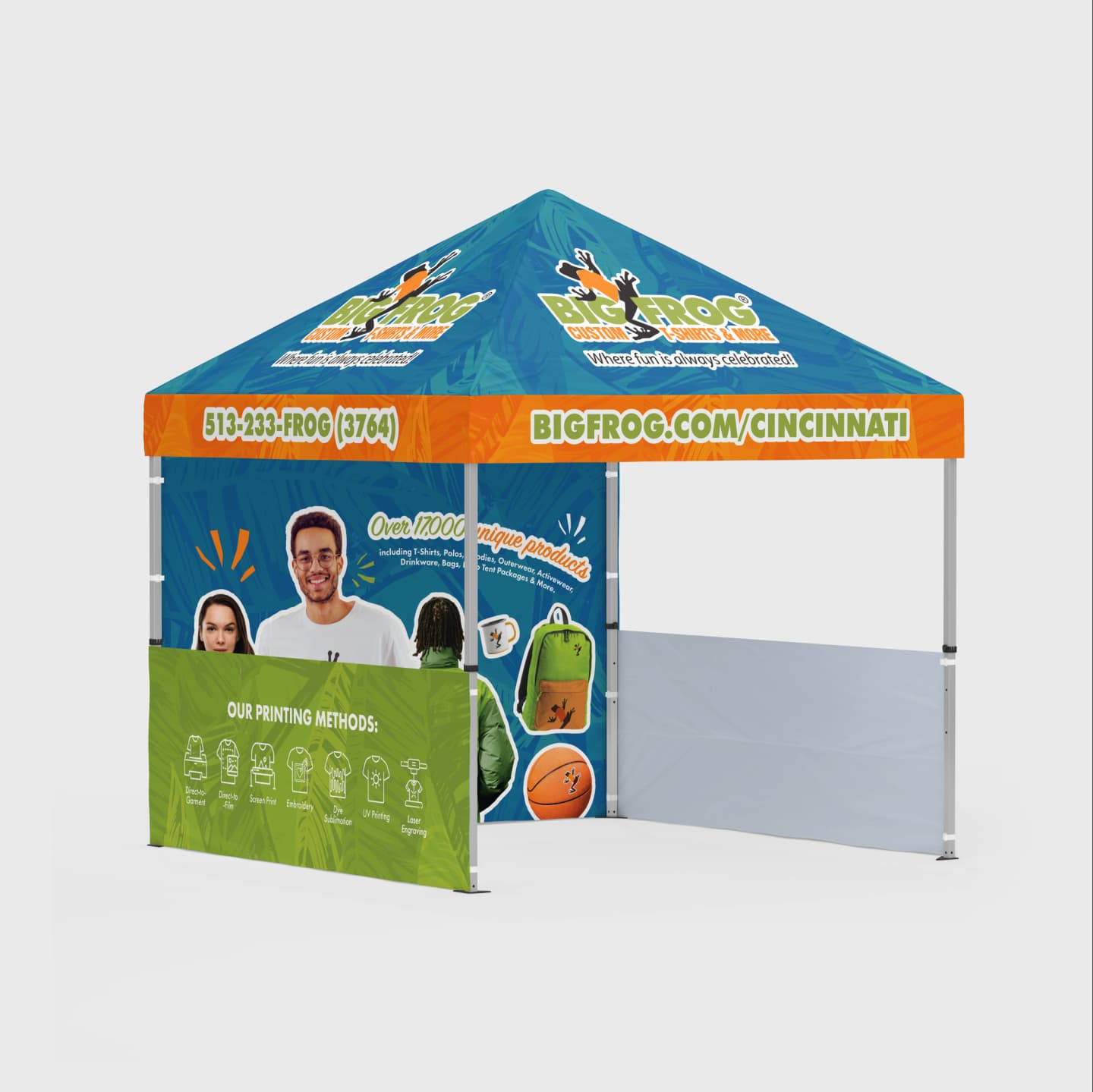
If you sell outdoors — a farmers market table, a food truck window, a craft fair booth, or a full vendor row at a street festival — a canopy tent isn't optional gear, it's your storefront. Rain, sun, and wind don't pause for your sales pitch, and a flimsy tent that collapses mid-event costs you more than the tent was worth. Here's how to buy a vendor tent that actually holds up, sized and specced for what you sell.
Pick your size
Tent size is about your table layout, not just your budget. A single 10x10 ft tent covers one vendor table with walking room on both sides — the standard size for a solo vendor or small booth. Step up to 10x15 ft when you need a second table or more product display space, and 10x20 ft when you're running a double booth, a small stage setup, or want room for both a sales counter and customer browsing space.
Tent size Best for Standard package from Premium package from
10x10 ft Single vendor table, solo booth $999 $1,349
10x15 ft Two tables, wider product display $1,299 $1,799
10x20 ft Double booth, sales counter + browsing space $1,399 $1,999
Current sizes and pricing: Custom Tents & Canopy Tents.
Frame and top: what "standard" vs. "premium" actually means
Every tent package includes a frame and a full-color, weatherproof printed top — that part isn't optional, it's the tent. The difference between standard and premium comes down to frame durability and print quality. A premium frame uses heavier-gauge hardware that holds up to repeat setup and teardown across a full season of markets, and the printed top typically steps up in resolution and color vibrancy — worth it if you're running the same tent weekend after weekend rather than using it once or twice a year.
Add walls if you're food or product-heavy
A bare frame-and-top tent works for most craft and retail vendors. If you're a food vendor, add printed or plain walls — they block wind for cooking equipment, give you a backdrop to work against, and can double as extra branded surface. A dedicated food service tent configuration exists specifically for this — check it if you're running a hot line or need enclosed prep space.
What actually breaks a cheap tent
Wind is the real test, not rain. A tent that looks fine in a parking lot demo can fold in the first real gust if the frame gauge is thin or the top isn't properly staked and weighted. Always stake or weight your tent, even on pavement where stakes aren't an option — use water-filled or sand-filled leg weights instead. And check the frame material before you buy: aluminum frames are lighter to carry and set up solo, but confirm the gauge is rated for outdoor wind loads, not just indoor trade show use.
Retail vs. food vs. general vendor tents
Retail and craft vendors usually want maximum branded surface — a full printed canopy top with your logo and product photography is the highest-visibility ad you'll run all season. Food vendors prioritize function first: walls, ventilation for cooking, and a layout that keeps your line moving. If you're not sure which fits, start with a standard 10x10 frame-and-top package and add walls or upgrade the print later — the frame is reusable across print refreshes.
Ready to order? Shop vendor and canopy tents — 10x10 through 10x20, standard and premium frames, full-color printed tops included. Setting up indoors instead? See the indoor trade show booth guide.
FAQ
What size vendor tent do I need?
10x10 ft covers a single vendor table comfortably. Go to 10x15 or 10x20 ft if you're running two tables, a double booth, or need room for a sales counter plus browsing space.
How much does a vendor tent cost?
Complete packages with frame and printed top start around $999 for a standard 10x10 and scale up to roughly $3,900 for a fully loaded premium 10x20, depending on size and print coverage.
Do vendor tents come with walls?
Base packages are frame and top only. Add printed or plain walls separately if you need wind protection or an enclosed prep space — common for food vendors.
Will a cheap tent survive an outdoor market?
Only if it's properly staked or weighted and the frame gauge is rated for outdoor wind, not just indoor display use. Thin frames and unweighted tents are the most common cause of a tent failing mid-event.